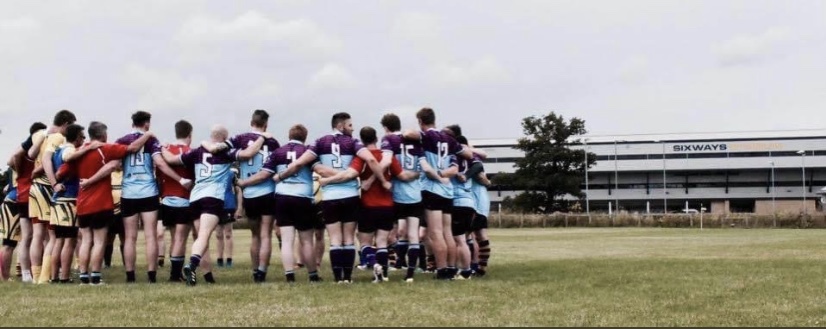
The effects of Worcester’s demise on the West Midlands, and how the region can recover.
The West Midlands is famous for many things, they were the inventors of Range Rovers, Cadbury’s, and the birthplace of the Balti curry.
It is also the birthplace of rugby, named after the town in Warwickshire where, as the old story goes, a schoolboy named William Webb Ellis allegedly picked up a football and began to run with it, in that moment inventing a sport that would go on to span hundreds of years and over a hundred nations.
So, it would stand to reason that the birthplace of the great sport would remain a powerhouse and fierce breeding ground of English rugby.
Well no.
If you discount Wasps who moved to Coventry in 2014, the sole professional representative of rugby in the West Midlands was Worcester Warriors. A team proudly built by the generous philanthropy of proud Worcestershirian Cecil Duckworth, who flew the West Mids banner for 13 seasons of Premiership rugby before being tragically plunged into administration last October and their future as a semi-pro club very much unknown.

For months Worcester was a rudder-less ship heading for disaster at an increasingly alarming pace.
Like the Titanic in 1912, thought to be unsinkable, but nonetheless one iceberg away from total ruin. The warning signs of total collapse were frequent from the start of the pre-season of 2022/23.
As described by former Worcester prop and Scotland international, Murray McCallum:
“Bailiffs turned up to take the Watt Bikes because we hadn’t paid the Watt Bike bill.
“We came in for pre-season and we didn’t have some medical supplies and I thought- oh right here we go then.”
Murray describes the moment that a group of 18-20-year-old academy players were made homeless, without warning, when the mortgage was defaulted on the academy housing that the club paid for.
“One lad was sat on the couch having a nap on his day off and some bloke walked in and dangled the keys in front of his face and said- just so you know I’ve just bought this house, I think the club are going to speak to you tomorrow.”
A number of factors can be attributed to the demise at Worcester, the COVID pandemic and the debt it ensued was the nail in the coffin, the metaphorical iceberg, but unluckily for Worcester, the captains of the ship were less than capable of maintaining course.
When asked if there is resentment between himself and former owners, Colin Goldring and Jason Whittingham, Murray replies in a split second:
“Massive, massive resentment.
“It was the lack of communication and the constant feeling that they didn’t really care. They never tried to message us, to tell us their side of the story. It was like they didn’t think they did anything wrong.
“There was a final court proceeding over Zoom that they didn’t even turn up to, it was a 24-second Zoom call and that was it, we were in administration.
“We found out on Twitter because that is where we got all our information at the time.
“The owners didn’t want to speak to us and told us nothing and they got annoyed at us for posting on Twitter.
“We were so in the dark; we didn’t know who to trust.”
Forced into unemployment in the middle of the season, they were left with nothing but memories of a final win at Newcastle, when staff ran the stadium and gameday procedures for free, knowing they wouldn’t be paid.
“We knew Newcastle would be our last game. We voted on whether we would play, we said we would play if two-thirds voted for it and 75% voted to play.
“At 10.30am on Wednesday the 5th of October, I was sat in my Mum’s conservatory. I read it on Twitter and then the boys in the WhatsApp group confirmed it- that’s it lads, we’re dust.”
The legacy of Worcester’s demise is not just bared by their former staff, however, they leave behind them the region of communities who were nurtured and supported by the club.
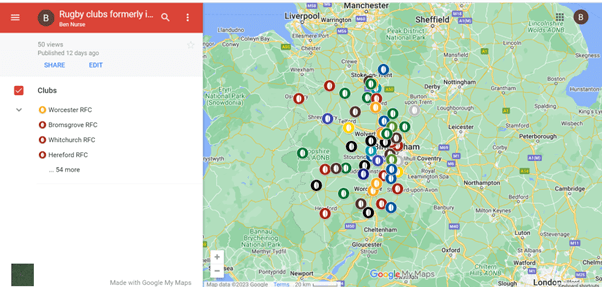
Some 200 metres over the road from the towering Sixways arena is local community club, Worcester RFC, who play amateur rugby in Tier six.
Tom Reeves, a Welshman turned adopted Worcestershirian, is Worcester RFC’S PR and Comms Officer and Head Coach of the Mixed Ability Team.
He is well versed in what rugby clubs can mean to people, as a member of the Worcester RFC family.
“It is a hive of activity; we have a thriving mini and juniors section, on Sundays its packed with kids eating hotdogs and tracking mud in the clubhouse.
“It is primarily a place to come and chew the fat and escape the worries of the world; it is a safety net and an extra family.”
For Tom and the rest of Worcester RFC, a big factor in the loss of Worcester Warriors is the many benefits of the overspill of fans on a Premiership matchday, eager to use the carpark and obtain food and refreshments.
“We’ve predicted £20,000-£25,000 lost revenue, per season. We’ve really had to look at ourselves and come together as a group of volunteers and find ways to plug that hole.
“As a community, it has ripped a lot of soul out of the area. There is a lot of annoyance around here and there is no one taking responsibility, everyone has just washed their hands with the issue.
“You can’t just pack up a rugby club and go and support another one. It is not just what we do on a Saturday, it is our support network, we care about what happens on the pitch but what is more important is the guy sat next to you every week, that you banter with and share a pie.”
Luckily, it seems the legacy of Warriors next-door-neighbours will far outlive that of the former Premiership Cup Champions.
As per Merton’s Law of Unintended Consequences, Warriors’ demise has contributed to a drastic uptake in attendance at Worcester RFC, as frustrated former fans try desperately to fill the large rugby-shaped hole in their hearts.
“We’ve had more people at men’s and women’s games; we had about 200 at an u21s game last week, it was packed.
“We are bucking the trend in rugby at the moment, and we are growing.”
A message, perhaps. That while elite professional rugby in the West Midlands is, for the time being dead, community rugby in the region is alive and kicking.
Regardless of the Premiership and its strife, there will always be a local club near you full of friendly faces where, as Tom puts it, “you can chew the fat and share some banter and pie and forget the worries of the world.”
After all, William Webb Ellis all those years ago at Rugby School had no intention of contracts or stadiums when he invented the sport we love, just a game with a ball and some friends.


great insight and read, very sad though for everyone invilved!
LikeLike
A good effort – inaccurate in places though.
LikeLike
how?
LikeLike