And the lessons modern clubs can learn from their demise.
For the last two decades, elite rugby in the North West has been dominated by Sale Sharks, with the Manchester-based outfit holding sole proprietorship and first pick over the talent emanating from the Cheshire, Greater Manchester, Merseyside and Lancashire catchments.
However, Sale have not always been the premiere club in the region.
That title used to belong to Orrell RUFC, a small club in Wigan which was rampant at the top of the first division over many years in the 1990s, rubbing shoulders with and slaying giants of English rugby like Leicester Tigers, Harlequins and Bath.
The team established by a group of friends in the 1920s beat Harlequins six times. Including one famous afternoon in 1990 when they garnered significant mainstream media attention, winning a televised national cup tie against a team laced with England internationals such as Will Carling, Peter Winterbottom and Micky Skinner.
The team famously described by a Harlequins committee member as “a lay-by on the M6”, attracted crowds of 6,000 and came within two points of winning the first division in 1992 led by England stars such as Dewi Morris and Nigel Heslop.
The Orrell ‘dream’, however, was always destined to be short-lived, and soon came to a crashing and tragic denouement as it was engulfed and spat out overnight by the new era of professionalism which arose in 1996.
Former club President, Jim Lloyd, is a man with the yellow and black of Orrell running through his veins, having begun playing for the club in 1957 and captained the team before being appointed President in 2001, in the midst of the financial collapse.
Reminiscing of the glory days before wages and contracts, Jim said: “It began as a club where players of all different backgrounds could meet and enjoy their Saturdays.
“It was also a club where not only rugby was played, but they organised an annual Carnival where everyone locally was involved which was a huge additional income to enable the facilities to expand and a new clubhouse to be built.
“Flood lights and pitch modifications were able to be funded, providing one of the best surfaces and facilities around the area which also brought in new players.”
As the better funded sides began to pay exponentially larger wages, up to £60,000 a year at some clubs, Orrell could not keep up and made the tough decision to only pay what they could afford, which meant sacrificing much of their international-quality talent, the likes of Morris and Heslop, and their place in the first division.
“We recruited from Wigan Warriors who, at the time, were paid more than the Orrell players, so when the books were balanced and it was levelled out, the wage bill was far too high and unsustainable.
“Unfortunately, when we were relegated, all the players were on two-year contracts and there were no parachute payments, so we simply couldn’t survive.
“After that, other clubs took note and demanded parachute payments when they went down.”
The demise unfolded rapidly as the club was forced into officially declaring itself amateur following a series of absurdly unfortunate events, including being forced from their beloved home, Edge Hall Road, the scene of their greatest victories and moments and the heartbeat of the Orrell dream.
Their clubhouse was burned down by vandals, destroying much of their representative shirts and trophies, completing the metaphorical and physical erosion of their proud history.
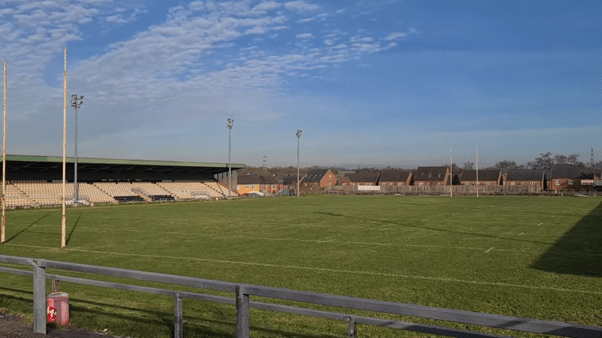
Edge Hall Road was never fully rebuilt and they were forced to move when they could not pay rent, driving them into a temporary home at John Rigby College, essentially an unkept open field, where they play to this day.
| Region | Teams in Premiership Since 1996 | League Titles |
| South East | 7: Harlequins, London Irish, London Scottish, London Welsh, Saracens, Richmond, Wasps* | 12 |
| Midlands | 4: Bedford, Northampton, Leicester, Worcester | 10 |
| South West | 4: Bath, Bristol, Exeter, Gloucester | 3 |
| North East | 4: Newcastle, Leeds, Rotherham, West Hartlepool | 1 |
| North West | 2: Orrell, Sale | 1 |
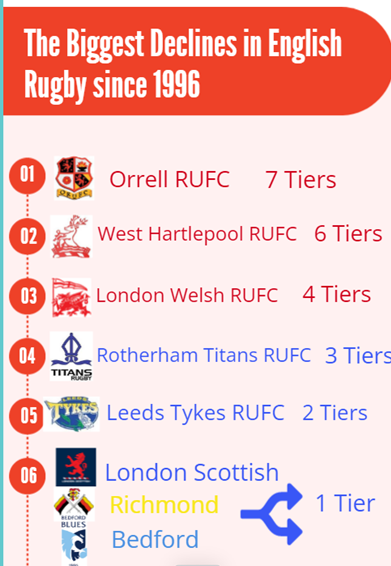
As seen in the table, Orrell aren’t the first Northern club to experience financial collapse. West Hartlepool, Leeds and Rotherham were all Premiership clubs in the last three decades but have all succumb to the same fate and are now amateur. Leaving just Sale and Newcastle as the sole professional representatives of the North of England.
However, amidst tragic stories of the destruction, corrosion and demise of many formerly elite clubs in the North, there rises a glimmer of hope from the Wirral peninsula. A phoenix from the ashes of Merseyside rugby.
Caldy RFC have seen a meteoric rise to semi-professionalism which culminated in a landmark and historic promotion to the Championship, the second tier, on the last day of the 2022 season.
Former player and RugbyPaper writer for Caldy, John Lyon, witnessed the unprecedented fairy-tale first-hand, dating back to when he would be the only journalist at Caldy’s home games at Paton Field, where attendances rarely reach 500 supporters.
“Caldy found itself in the situation of being the best club in Merseyside almost accidentally.
“They were playing tier five, then four, then three, then suddenly you’re rubbing shoulders with the biggest names in rugby, Rosslyn Park, Moseley, Richmond, and competing.
“Other clubs, even in Merseyside, have tried to do more than they could and there are clubs in the division now who spend a lot of money and rely on dual-registered Premiership players.
“It was not a deliberate plan to get promoted to the Championship, Caldy have got to where they are by playing the best rugby they could, within their means.”
Although seemingly accidental, Caldy’s promotion, presence and competitiveness in England’s second tier has acted as a beacon of hope for rugby in the North West when, apart from Sale Sharks, the situation appeared hopeless.
“If you’re a good young player in Merseyside, you will come knocking at Caldy’s door and likewise if you’re a student at the University of Liverpool.
“It is the nature of rugby in Merseyside, players who play at level five, six or seven, they decide they can do better and come to Caldy.
“There was a worry Caldy wouldn’t be able to compete in the Championship. What’s been amazing is not just winning six games but also the crowds we’ve been able to attract, in what is essentially an open field.”
However, while Caldy continue to bask in the limelight of semi-professionalism, they will be smart to learn from the lessons of Orrell, of the dangers of professionalism.
When asked what modern clubs, like Caldy, can learn from the events at Orrell, Jim Lloyd said simply: “Only spend what you know you have, stay away from debt, don’t get carried away.”
The Championship has seen a myriad of clubs, from those with potential and excitement, to those with history and legacy, collapse under the immense pressure of contracts and debt and self-implode from sky-rocketing wage bills.
While Caldy currently appear grounded and grateful for the position they are in, with an acceptable wage bill of humble players, they must continue to be strict in this regard, and stick to the modest, diligent principles that have made many, including John, fall in love with their story.


Played at Orrell and Caldy back in the day. Both very sociable outfits. Glad to hear about Caldys rise and disappointed to hear about Orrells fall from grace and the loss of their trophies.
LikeLike
Orrell the forgotten club?? I think Wakefield take that crown….not even mentioned in this article and were in the initial premiership in the early days of professionalism.
LikeLike
So forgotten I forgot about them
LikeLike