17 years ago a wide-eyed Sam James was a ball-boy at Edgeley Park, Sale Sharks former home in Stockport.
As with any boy or girl who has picked up or kicked an oval or round ball, Sam dreamed of re-creating the success of the heroes whom he watched every week.
Unlike most kids, however, Sam has the chance to do just that when he plays in the Premiership final this Saturday, Sale’s first Premiership Final since they won their only title in 2006.
As a boy growing up in South Manchester in the early 2000s Sam was in the midst of the brutally dominant Alex Ferguson-era of Manchester United and on the cusp of the ground-breaking purchase of Manchester City by Sheikh Mansour.
However, on the 14th May 2006, a week after Ferguson’s United ended their campaign with a 4-0 win over Charlton in front of 73,000 at Old Trafford, Sam was in his usual spot at Edgeley Park watching Sale play a Premiership semi-final.
“Those days I dreamed of being involved with the club in any capacity, I was in awe of those players like Charlie Hodgson, Jason Robinson, they were superstars.
“When they won the title it really pushed me to want to be in their shoes.
“I wasn’t allowed to ball boy at Twickenham so I watched the final on TV at my local club, Manchester, it was a huge moment for everyone.”
Now, 17 years later, Sam and the rest of the Sale team have the chance to turn their idols into peers and bring a second Premiership title back to Manchester.
“We want to writer our names alongside theirs in history.”
The legacy of Sale’s victory in 2006 can be seen in their current squad. A team pioneered and encapsulated by hungry and determined young talent: Bevan Rodd, Ewan Ashman, Gus Warr, Raffi Quirke, Tom Roebuck, Joe Carpenter – all were at the tender age of 5-8 years when Charlie Hodgson and co lifted the trophy.
If Ryan Giggs, David Beckham and Paul Scholes were the poster boys for the ‘Class of 92’ then the 2023 crop of youngsters at Sale are their rugby counterparts.
Sam hopes that a similar feat on Saturday can kickstart another generation of rugby obsessed Mancunians.
“The supporter bases are their and you can see them at the local clubs,
“We want to provide that pathway for the next generation. If young kids see us at the top of the game and playing well then more of them will want to follow us, just like I did at Edgeley Park all those years ago.”
In a notion of poetic justice, Sir Alex was in attendance at Sale training this week.
Visiting their camp in Carrington, ironically the former base of Roberto Mancini’s Manchester City, Ferguson spoke to the coaches and players about leadership and playing under immense pressure.
A microcosm, perhaps, of how far this Sale team has come. A team of players who have gone from fans to heroes, who as kids watched their team play in front of 5,000 fans and who themselves will play in front of 70,000 at Twickenham.
Rugby will never surpass football in Manchester. However, if there are any future Sam James’ watching live or at home on Saturday, then they can go along way to ensuring another generation of talented rugby-obsessed Mancunians.
The problems with England’s elite game and what needs to be done.
The Ancient Greek myth of Icarus highlights the dangers of extreme hubris and arrogance. It features a young and foolish boy who begins the story as a proud and virtuous man but is corrupted when handed excessive power.
Icarus is overcome and giddy with excitement when his father gifts him wings with which to fly. His father gives him a single stern warning, do not fly too close to the sun, else you will lose it all. Nonetheless, overwhelmed with eagerness and complacency, Icarus disobeys and flies as high as he possibly can, too close to the sun, his wings set on fire, and he is killed.
In a funny way, English rugby is not unlike the mythical Icarus, handed the freedom and opportunity of professionalism, it has failed to acknowledge the obvious and ominous signs of its trajectory and finds itself dangerously close to the sun’s orbit – on the brink of oblivion.
English rugby is a baby when compared to its sporting rivals. Football became professional in 1885, 138 years ago, cricket in the 1960s, around 60 years ago, while rugby has had a measly 28 years of professionalism. If the life span of professional football was the average human life of 80 years, then rugby would be a spotty, confused 16-year-old, adapting to its new voice and sudden fondness for girls.
As put by MP for Ashford Damian Green in the DCMS report on English rugby union: “Is it possible that the attempt to turn club rugby into a professional game in this country ran before it could walk? Things got too ambitious, and people have spent too much money. Are we trying to support an infrastructure that there just isn’t enough demand for, that there is not enough TV revenue, not enough gate revenue, not enough of all the ancillary revenues to support the kind of institutions we have set up?”
This year, two Premiership clubs, Worcester Warriors and Wasps, have already been forced into administration and the rest are barely afloat, as shown through their annual reports. Most surviving solely on revenue streams from the international game and from their owners plunging excessive funds into the clubs, forcing them further and further into debt.
The team crowned English champions a matter of months ago, Leicester Tigers, required a bailout payment from shareholders of £13m to avoid the possibility of urgent alternate funding or administration. With Tigers consistently one of the league-leaders in attendance, and therefore gate revenue, this news spelled grim and ominous reading for fans of all clubs.
A brief look at the Companies House documents for the eleven remaining Premiership shows the daunting severity of the situation. Clubs such as Saracens and Harlequins have made respectable turnover, £21m and £27m respectively, but only three teams in the last two seasons have reported a post-tax profit or broken even and Saracens and Exeter losing over £5m each in 2021 is clearly an unsustainable business model.
Club:
Financial Loss/Profit 2022 (after tax)
Financial Loss/profit 2021 (after tax)
Turnover
Wage Expenditure
Bath
-£0.1m
-£0.3m
£19.8m
£10.6m
Bristol
-£3.3m
-£3.5m
£14.2m
£9.9m
Exeter
-£1.2m
-£6.3m
£20.2m
£12.1m
Gloucester
-£0.6m
+£0.1m
£17m
£10.5m
Harlequins
-£1.5m
+£0.5m
£27m
£12.3m
Northampton
-£0.1m
-£0.3m
£20.8m
£10.7m
Newcastle
N/A
+£3.5m
£8.9m*
£7.4m*
London Irish
N/A
-£3.9m
£8.6m*
£8.4m*
Sale
-£3.3m
-£1.5m
£12.2m
£9.6m
Saracens
-£4.9m
-£5.3m
£21.4m
£12.6m
*= 2021
If the financial fragility of the current Premiership clubs isn’t ominous enough, the fact that over 25% (4/14) of clubs that have been in the Premiership in the last 15 years have gone into administration, and not returned, should bring home the gravity of this desperate situation.
Club
Years in Premiership
Where are they now?
Bristol Bears
2008-2009, 2017, 2019-2023
Current Premiership club
Bath
2008-2023
Current Premiership club
Exeter Chiefs
2011-2023
Current Premiership club
Gloucester
2008-2023
Current Premiership Club
Harlequins
2008-2023
Current Premiership club
Newcastle Falcons
2008-2012, 2014-2019, 2021-2023
Current Premiership club
Leicester Tigers
2008-2023
Current Premiership club
Leeds Carnegie
2008, 2010-2011
Went bust, Tier 3
London Irish
2008-2016, 2018, 2020-2023
Current Premiership club
London Welsh
2013, 2015
Went bust, Tier 5
London Wasps
2008-2022
Went bust, Tier 2
Sale Sharks
2008-2023
Current Premiership club
Saracens
2008-2020, 2022-2023
Current Premiership club
Worcester Warriors
2008-2010, 2012-2014, 2016-2022
Went bust, future unknown
Published PhD researcher and senior lecturer in Sport’s Business, Andy Golding, wrote a report on the business sustainability of professional Rugby Union in which he stated: “Professional rugby seems unable to grasp the basis of any business, which is to generate revenues to cover costs, not to build a cost base and then try to generate revenues to cover them”.
Asked to elaborate this point, Andy highlights the lack of direction of Premiership owners to create revenue streams before budgeting large, professional scale projects.
“A lot of people approach owning a rugby club as philanthropic exercise and it seems that any principles of business that would apply outside the ecosphere of professional rugby get thrown out the window.
“Things like ground-shares, sharing a ground with another club, are not profitable, you have to own your stadium to be profitable because you can make money hosting hospitality and networking events.
“It is a simple principle of business that you have to have the money coming in to cover costs, which doesn’t apply in rugby.”
The other main issue Andy highlights is the lack of alignment between Premiership clubs and between the clubs, and PRL, and the RFU. On this point, Andy celebrates plans for an English independent framework, similar to the Ligue Nationale de Rugby in France, but insists more has to be done.
“Owners in the Premiership have differing objectives, say one club wants to avoid relegation and one wants to finish in top four, those objectives show in their ownership models.
“The RFU governs the amateur game and operates from an amateur ethos while PRL operates from a professional business ethos and often the objectives aren’t the same. There is constant conflict between club and country, and they don’t share the same objectives.
“You need an independent framework which checks and balances both bodies and ensures sustainability.
“There is little proactive thought, much of what is done is reactive, but as we have seen it may be too late.”
Kieran Maguire, an expert in football finances and author of the book, ‘The Price of Football’, helped compare the billion-pound money churner which is association football, with the wilting debt-machine which is English rugby.
“What rugby has, is a growing cost base, but limits in increasing its scope in the three pillars of revenue, ticket sales, broadcast deals and commercial partners.
“The inability to control costs is the challenge for the game. Especially for a game which is struggling for column inches at the club level.
“The Premier League is watched by 188 nations around the world, it is global; how many different nations watch Gallagher Premiership rugby? A handful?
“If I am a ultra-net worth individual and I want people around the world to know who I am, I will buy a Premier League club; look at Newcastle United, their new owners exchanged a relatively low amount of money for them, for a huge amount of attention.
“Rugby doesn’t have that recognition, that kudos.
“There needs to be a culture change. It only takes a few owners who think they can buy their way to success, to set about an ‘arms race’.
“Once they start spending more than they have then other clubs will be forced to do the same or risk losing all their players.
“Some owners can afford for their clubs to lose a lot of money and some can’t, which creates tension in the sport. Unless the owners vote collectively for draconian cost-cutting processes, I don’t see things changing.”
So before English clubs race for the next Kiwi or Saffa import, eyes glazed over with greed and gagging to exchange hundred-pound notes for a brief taste of glory. And before the RFU announce their next million-pound profit turnover while another club slips into the abyss and the Championship rots in the limbo of semi-professionalism.
They should remember the cautionary tale of Icarus. The man who was overambitious and greedy. The man who was given everything he could have ever wanted and lost it all.
And the lessons modern clubs can learn from their demise.
For the last two decades, elite rugby in the North West has been dominated by Sale Sharks, with the Manchester-based outfit holding sole proprietorship and first pick over the talent emanating from the Cheshire, Greater Manchester, Merseyside and Lancashire catchments.
However, Sale have not always been the premiere club in the region.
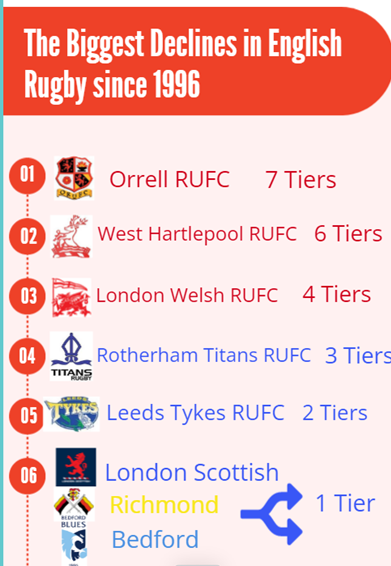
That title used to belong to Orrell RUFC, a small club in Wigan which was rampant at the top of the first division over many years in the 1990s, rubbing shoulders with and slaying giants of English rugby like Leicester Tigers, Harlequins and Bath.
The team established by a group of friends in the 1920s beat Harlequins six times. Including one famous afternoon in 1990 when they garnered significant mainstream media attention, winning a televised national cup tie against a team laced with England internationals such as Will Carling, Peter Winterbottom and Micky Skinner.
The team famously described by a Harlequins committee member as “a lay-by on the M6”, attracted crowds of 6,000 and came within two points of winning the first division in 1992 led by England stars such as Dewi Morris and Nigel Heslop.
The Orrell ‘dream’, however, was always destined to be short-lived, and soon came to a crashing and tragic denouement as it was engulfed and spat out overnight by the new era of professionalism which arose in 1996.
(Click for interactive infographic)
Former club President, Jim Lloyd, is a man with the yellow and black of Orrell running through his veins, having begun playing for the club in 1957 and captained the team before being appointed President in 2001, in the midst of the financial collapse.
Reminiscing of the glory days before wages and contracts, Jim said: “It began as a club where players of all different backgrounds could meet and enjoy their Saturdays.
“It was also a club where not only rugby was played, but they organised an annual Carnival where everyone locally was involved which was a huge additional income to enable the facilities to expand and a new clubhouse to be built.
“Flood lights and pitch modifications were able to be funded, providing one of the best surfaces and facilities around the area which also brought in new players.”
As the better funded sides began to pay exponentially larger wages, up to £60,000 a year at some clubs, Orrell could not keep up and made the tough decision to only pay what they could afford, which meant sacrificing much of their international-quality talent, the likes of Morris and Heslop, and their place in the first division.
“We recruited from Wigan Warriors who, at the time, were paid more than the Orrell players, so when the books were balanced and it was levelled out, the wage bill was far too high and unsustainable.
“Unfortunately, when we were relegated, all the players were on two-year contracts and there were no parachute payments, so we simply couldn’t survive.
“After that, other clubs took note and demanded parachute payments when they went down.”
The demise unfolded rapidly as the club was forced into officially declaring itself amateur following a series of absurdly unfortunate events, including being forced from their beloved home, Edge Hall Road, the scene of their greatest victories and moments and the heartbeat of the Orrell dream.
Their clubhouse was burned down by vandals, destroying much of their representative shirts and trophies, completing the metaphorical and physical erosion of their proud history.
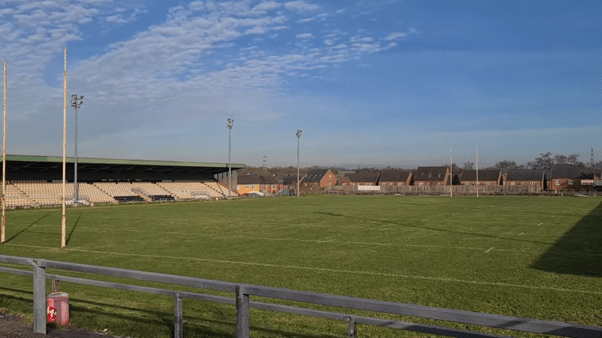
Edge Hall Road was never fully rebuilt and they were forced to move when they could not pay rent, driving them into a temporary home at John Rigby College, essentially an unkept open field, where they play to this day.
Region
Teams in Premiership Since 1996
League Titles
South East
7: Harlequins, London Irish, London Scottish, London Welsh, Saracens, Richmond, Wasps*
12
Midlands
4: Bedford, Northampton, Leicester, Worcester
10
South West
4: Bath, Bristol, Exeter, Gloucester
3
North East
4: Newcastle, Leeds, Rotherham, West Hartlepool
1
North West
2: Orrell, Sale
1
As seen in the table, Orrell aren’t the first Northern club to experience financial collapse. West Hartlepool, Leeds and Rotherham were all Premiership clubs in the last three decades but have all succumb to the same fate and are now amateur. Leaving just Sale and Newcastle as the sole professional representatives of the North of England.
However, amidst tragic stories of the destruction, corrosion and demise of many formerly elite clubs in the North, there rises a glimmer of hope from the Wirral peninsula. A phoenix from the ashes of Merseyside rugby.
Caldy RFC have seen a meteoric rise to semi-professionalism which culminated in a landmark and historic promotion to the Championship, the second tier, on the last day of the 2022 season.
Former player and RugbyPaper writer for Caldy, John Lyon, witnessed the unprecedented fairy-tale first-hand, dating back to when he would be the only journalist at Caldy’s home games at Paton Field, where attendances rarely reach 500 supporters.
“Caldy found itself in the situation of being the best club in Merseyside almost accidentally.
“They were playing tier five, then four, then three, then suddenly you’re rubbing shoulders with the biggest names in rugby, Rosslyn Park, Moseley, Richmond, and competing.
“Other clubs, even in Merseyside, have tried to do more than they could and there are clubs in the division now who spend a lot of money and rely on dual-registered Premiership players.
“It was not a deliberate plan to get promoted to the Championship, Caldy have got to where they are by playing the best rugby they could, within their means.”
Although seemingly accidental, Caldy’s promotion, presence and competitiveness in England’s second tier has acted as a beacon of hope for rugby in the North West when, apart from Sale Sharks, the situation appeared hopeless.
“If you’re a good young player in Merseyside, you will come knocking at Caldy’s door and likewise if you’re a student at the University of Liverpool.
“It is the nature of rugby in Merseyside, players who play at level five, six or seven, they decide they can do better and come to Caldy.
“There was a worry Caldy wouldn’t be able to compete in the Championship. What’s been amazing is not just winning six games but also the crowds we’ve been able to attract, in what is essentially an open field.”
However, while Caldy continue to bask in the limelight of semi-professionalism, they will be smart to learn from the lessons of Orrell, of the dangers of professionalism.
When asked what modern clubs, like Caldy, can learn from the events at Orrell, Jim Lloyd said simply: “Only spend what you know you have, stay away from debt, don’t get carried away.”
The Championship has seen a myriad of clubs, from those with potential and excitement, to those with history and legacy, collapse under the immense pressure of contracts and debt and self-implode from sky-rocketing wage bills.
While Caldy currently appear grounded and grateful for the position they are in, with an acceptable wage bill of humble players, they must continue to be strict in this regard, and stick to the modest, diligent principles that have made many, including John, fall in love with their story.
The effects of Worcester’s demise on the West Midlands, and how the region can recover.
The West Midlands is famous for many things, they were the inventors of Range Rovers, Cadbury’s, and the birthplace of the Balti curry.
It is also the birthplace of rugby, named after the town in Warwickshire where, as the old story goes, a schoolboy named William Webb Ellis allegedly picked up a football and began to run with it, in that moment inventing a sport that would go on to span hundreds of years and over a hundred nations.
So, it would stand to reason that the birthplace of the great sport would remain a powerhouse and fierce breeding ground of English rugby.
Well no.
If you discount Wasps who moved to Coventry in 2014, the sole professional representative of rugby in the West Midlands was Worcester Warriors. A team proudly built by the generous philanthropy of proud Worcestershirian Cecil Duckworth, who flew the West Mids banner for 13 seasons of Premiership rugby before being tragically plunged into administration last October and their future as a semi-pro club very much unknown.
(Click for full timeline)
For months Worcester was a rudder-less ship heading for disaster at an increasingly alarming pace.
Like the Titanic in 1912, thought to be unsinkable, but nonetheless one iceberg away from total ruin. The warning signs of total collapse were frequent from the start of the pre-season of 2022/23.
As described by former Worcester prop and Scotland international, Murray McCallum:
“Bailiffs turned up to take the Watt Bikes because we hadn’t paid the Watt Bike bill.
“We came in for pre-season and we didn’t have some medical supplies and I thought- oh right here we go then.”
Murray describes the moment that a group of 18-20-year-old academy players were made homeless, without warning, when the mortgage was defaulted on the academy housing that the club paid for.
“One lad was sat on the couch having a nap on his day off and some bloke walked in and dangled the keys in front of his face and said- just so you know I’ve just bought this house, I think the club are going to speak to you tomorrow.”
A number of factors can be attributed to the demise at Worcester, the COVID pandemic and the debt it ensued was the nail in the coffin, the metaphorical iceberg, but unluckily for Worcester, the captains of the ship were less than capable of maintaining course.
When asked if there is resentment between himself and former owners, Colin Goldring and Jason Whittingham, Murray replies in a split second:
“Massive, massive resentment.
“It was the lack of communication and the constant feeling that they didn’t really care. They never tried to message us, to tell us their side of the story. It was like they didn’t think they did anything wrong.
“There was a final court proceeding over Zoom that they didn’t even turn up to, it was a 24-second Zoom call and that was it, we were in administration.
“We found out on Twitter because that is where we got all our information at the time.
“The owners didn’t want to speak to us and told us nothing and they got annoyed at us for posting on Twitter.
“We were so in the dark; we didn’t know who to trust.”
Forced into unemployment in the middle of the season, they were left with nothing but memories of a final win at Newcastle, when staff ran the stadium and gameday procedures for free, knowing they wouldn’t be paid.
“We knew Newcastle would be our last game. We voted on whether we would play, we said we would play if two-thirds voted for it and 75% voted to play.
“At 10.30am on Wednesday the 5th of October, I was sat in my Mum’s conservatory. I read it on Twitter and then the boys in the WhatsApp group confirmed it- that’s it lads, we’re dust.”
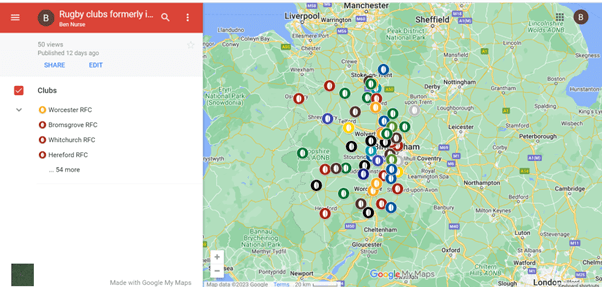
The legacy of Worcester’s demise is not just bared by their former staff, however, they leave behind them the region of communities who were nurtured and supported by the club.
(Click for full interactive map)
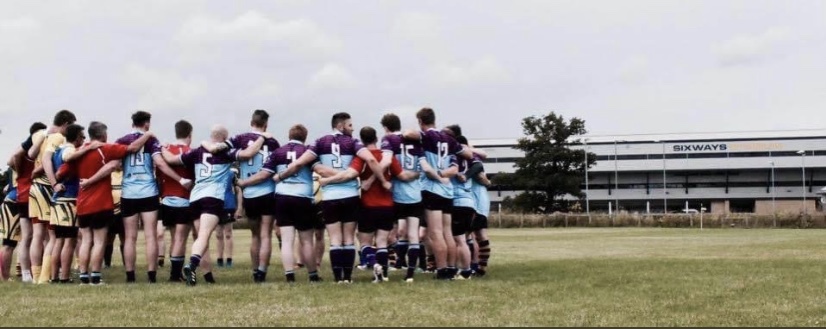
Some 200 metres over the road from the towering Sixways arena is local community club, Worcester RFC, who play amateur rugby in Tier six.
Tom Reeves, a Welshman turned adopted Worcestershirian, is Worcester RFC’S PR and Comms Officer and Head Coach of the Mixed Ability Team.
He is well versed in what rugby clubs can mean to people, as a member of the Worcester RFC family.
“It is a hive of activity; we have a thriving mini and juniors section, on Sundays its packed with kids eating hotdogs and tracking mud in the clubhouse.
“It is primarily a place to come and chew the fat and escape the worries of the world; it is a safety net and an extra family.”
For Tom and the rest of Worcester RFC, a big factor in the loss of Worcester Warriors is the many benefits of the overspill of fans on a Premiership matchday, eager to use the carpark and obtain food and refreshments.
“We’ve predicted £20,000-£25,000 lost revenue, per season. We’ve really had to look at ourselves and come together as a group of volunteers and find ways to plug that hole.
“As a community, it has ripped a lot of soul out of the area. There is a lot of annoyance around here and there is no one taking responsibility, everyone has just washed their hands with the issue.
“You can’t just pack up a rugby club and go and support another one. It is not just what we do on a Saturday, it is our support network, we care about what happens on the pitch but what is more important is the guy sat next to you every week, that you banter with and share a pie.”
Luckily, it seems the legacy of Warriors next-door-neighbours will far outlive that of the former Premiership Cup Champions.
As per Merton’s Law of Unintended Consequences, Warriors’ demise has contributed to a drastic uptake in attendance at Worcester RFC, as frustrated former fans try desperately to fill the large rugby-shaped hole in their hearts.
“We’ve had more people at men’s and women’s games; we had about 200 at an u21s game last week, it was packed.
“We are bucking the trend in rugby at the moment, and we are growing.”
A message, perhaps. That while elite professional rugby in the West Midlands is, for the time being dead, community rugby in the region is alive and kicking.
Regardless of the Premiership and its strife, there will always be a local club near you full of friendly faces where, as Tom puts it, “you can chew the fat and share some banter and pie and forget the worries of the world.”
After all, William Webb Ellis all those years ago at Rugby School had no intention of contracts or stadiums when he invented the sport we love, just a game with a ball and some friends.
The countdown has begun for the 2023 Rugby World Cup, which promises to be an exciting and closely fought contest. South Africa will be hoping to defend their title, while perennial contenders New Zealand will be looking to add to their impressive trophy cabinet. However, there are several other teams that will be fancying their chances of lifting the Webb Ellis Cup, including Ireland, who are currently considered to be the best team in the world.
Australia recently hired Eddie Jones as their head coach, and the Wallabies will be hoping that the former England coach can guide them to their third Rugby World Cup triumph. Meanwhile, England have a new coach in the form of Steve Borthwick, who will be tasked with restoring the national team’s reputation after a disappointing 2019 World Cup campaign. Wales, on the other hand, have re-hired their former head coach Warren Gatland, who led them to the semi-finals of the last two World Cups.
However, all eyes will be on France, who will be playing in front of their passionate home fans. The French have a rich rugby history and have produced some of the most exciting players in the world. They will be looking to channel this passion and energy to propel them to World Cup glory.
South Africa’s style of rugby is built on a strong pack of forwards who dominate their opponents at the scrum and lineout. They also possess some powerful ball carriers, particularly in the back row, who are capable of breaking through defensive lines. However, their biggest strength lies in their defense, which is often impenetrable. The Springboks will be looking to replicate the suffocating defensive performance that won them the 2019 World Cup.
New Zealand’s style of rugby is based on a high-tempo, attacking game plan that involves quick ball movement and an emphasis on offloading. They possess some of the most skillful and elusive players in the world, who are capable of turning a game on its head with a moment of brilliance. Their backline is particularly potent, with the likes of Beauden Barrett and Rieko Ioane capable of tearing defenses apart. The All Blacks will be looking to use their attacking prowess to overwhelm their opponents and score plenty of tries.
Ireland’s style of rugby is built on a strong set piece, with a dominant scrum and lineout. They also possess some talented ball carriers in the back row, who are capable of making significant ground with every carry. However, their biggest strength lies in their tactical kicking game, which is often used to pin their opponents back in their own half. The Irish will be looking to control the game through their set piece and tactical kicking, while also capitalizing on any opportunities to attack.
Australia’s style of rugby is based on a fast-paced, attacking game plan that involves quick ball movement and an emphasis on running rugby. They possess some exciting attacking players, particularly in the backline, who are capable of scoring tries from anywhere on the field. However, their biggest weakness lies in their defense, which has often been exposed by more physical teams. The Wallabies will be looking to use their attacking prowess to outscore their opponents, while also shoring up their defense under Eddie Jones’ guidance.
England’s style of rugby is built on a powerful set piece, with a dominant scrum and lineout. They also possess some talented ball carriers in the back row, who are capable of making significant ground with every carry. However, their biggest weakness lies in their lack of creativity and attacking flair, which has often been criticized by fans and pundits alike. The English will be looking to add some creativity to their game under Steve Borthwick’s guidance, while also relying on their powerful set piece to dominate their opponents.
Wales’ style of rugby is based on a strong set piece, with a dominant scrum and lineout. They also possess some skillful and creative backs, who are capable of producing moments of magic to unlock even the toughest of defenses. Warren Gatland’s return as head coach will provide a boost of confidence to the Welsh squad, who have always been known for their resilience and never-say-die attitude. The Welsh will be looking to use their physicality and creative flair to outmuscle and outscore their opponents, while also relying on their defensive organization to keep their opponents at bay.
In conclusion, the 2023 Rugby World Cup promises to be an exciting and closely fought tournament, with several teams fancying their chances of lifting the Webb Ellis Cup. South Africa will be looking to defend their title, while New Zealand will be hoping to add to their impressive trophy cabinet. Ireland, currently considered to be the best team in the world, will be looking to finally clinch the elusive World Cup title. Meanwhile, Australia, England, Wales, and France will be hoping to make a mark and leave a lasting impression on the tournament.
Each team has its own distinct style of rugby, with some relying on a powerful set piece, while others favor a high-tempo, attacking game plan. The teams will be looking to utilize their strengths and exploit their opponents’ weaknesses to gain an advantage in the tournament. However, ultimately, it will be the team that can combine their strengths with tactical flexibility and adaptability that will come out on top.
As fans eagerly anticipate the start of the tournament, there is a sense of excitement and anticipation in the air. With the tournament being held in France, the home team will be hoping to draw on the passion and energy of their fans to propel them to World Cup glory. However, with the quality and depth of talent on display, there are sure to be several thrilling matches and surprise results. It promises to be a memorable tournament, and fans around the world will be eagerly watching as the teams battle it out for rugby’s ultimate prize.
(This piece was written by Chat GPT, the AI literary generator, to test its potential and capabilities)
In Greek mythology Sisyphus was a former King of Corinth who dreamed of being immortal, he would frequently attempt to trick the Greek Gods and coerce them into awarding him his wish of never dying.
As punishment for his crimes, Sisyphus was sentenced with rolling a boulder up a hill in Tartarus, over and over again, for eternity. Each time Sisyphus completed his task and hauled the boulder to the top of the hill it would roll back down, restarting his task. Sisyphus was granted his wish of immortality, but in the process was condemned with a brutal infinity of scrupulous and monotonous repetition. Over time the fable of Sisyphus became a philosophical metaphor for human nihilism, put simply, continually doing something difficult for no reason and for no real gain.
Some 4000 years later and across the continent in Manchester, Will Cliff is not too unlike Sisyphus as he laces his boots before Sale Sharks fixture against Saracens.
Will has played over 200 games for Sale Sharks but today he is a travelling reserve and will warm-up with the squad in case of a last-minute injury but barring this eventuality, will not play in the match. Just like the former King of Corinth rolling his boulder to the top of the hill, only for it to roll down again, Will’s hard work today will not see his name written across the headlines of tomorrow’s back page.
It is not impossible, of course, for a last-minute injury to occur. In 2017 Harlequins player-coach Adam Jones was preparing for a cushy afternoon in the coaches box before Joe Marler tweaked his calf in the warmup, forcing Jones to rush to hurriedly change into playing kit to take his place on the bench, eventually playing 20 minutes in a 29-26 win.
So, what does a day look like for a ‘TR’, as they are known in the business.
2.30pm: Warmup
“You go through all the same build-up as the guys who are playing, but you probably aren’t as focused, you’re probably a level below.
“But as soon as you’ve got your kit on and you start warming up, you’re fully focused because now your job is to help prepare the guys who are playing.
“In that moment it is no different to if you are playing.
“It is after the warmup when the rest of the lads go in and you stay out to do some extra fitness and it hits you that you aren’t playing because everyone has made it through the warmup.
“Eventually you head back in and you see the mascots all lined up ready and the fans are buzzing and the flags are waving and that’s the point where you go – ‘I’d love to be playing, I wish it was me running out today’”.
Will now takes his place on the bench alongside the other TRs, separate from the substitutes to watch the first half. Despite having the best seats in the house, he can’t shake the burning feeling that every professional sportsperson has when they watch their team play a big game without them.
Is there a small part of him that wishes Gus Warr or Raffi Quirke had got a knock in the warmup so he could step into the team?
“No there actually isn’t. When I was younger and I was chomping at the bit- yes, and it has happened before to me.
“These days, obviously I really want to play, but there’s no part of me that’s thinking ‘I hope someone goes down here’ simply because I am less prepared than they are.
“In the week I know I’ll be a TR so I’ve been running around as a Saracens player, so I’m not as prepared on the detail of our plays.
“The night before you do everything you should, you eat your pre-match meal and you get an early night, but you know in your head you’re not as prepared as you could be.
“If someone had fallen out, I would have sat for the whole first half catching up on our plays, but it is not ideal.”
3.45pm: Half-time
While the crowd simmers and slowly disperses for a quick toilet, beer and hot dog detour and fans are invited on the field for a half-time kicking contest, the TRs make their lonely trudge round the field.
With a lack of coaches, who are inside grilling the playing 23, there is a visible lethargy with which the TRs complete their customary kick and pass drills.
Will puts up a bomb kick for fellow TR Byron McGuigan as a wry cackle ripples around the crowd due to a particularly poor and comical effort at winning an LED TV in the kicking contest.
4.45pm: Full-time
Sale run out rampant 35-22 victors over the league-leaders, the baying audience maintain their volume as the players lap up the love in their post-match lap of honour.
Will goes with them and smiles as he catches up with old friends on the partition between player and fan.
But it is not the same, he describes, as if you had starred in the spectacle, if you had scored the winning try or simply put your 100% into pushing the team over the line.
That is the life of a TR, a constant slightly diluted, watered downed taste in your mouth, when you really want the full flavour experience. Doing the work for little reward.
However, those of the philosophical persuasion will know that the story of Sisyphus is not one of tragedy or despair. In 1942 the French philosopher Camu wrote an interpretation in which Sisyphus beat the Gods by finding a sick, sadistic pleasure in his task, realising he had no other choice.
Just as Will finds pleasure in ensuring Gus Warr is fully prepared for a hard fixture.
“Especially for someone like me who’s had a long career, you feel responsible for making sure the younger lads are 100%, as fully prepared as they can be.
“Before every game I’ll work with the other nines and I’m there for whatever they need. I’ll put pressure on their kicks I’ll kick for them to catch.
“The lads will be well prepared but if you see something as the game starts to unfold, you’ll tap one of the boys on the back and tell them ‘There’s space in the back left corner, or that opposition nine is slow on his box-kick you can charge him down’.
“You have to take some pride in helping them be ready.”
Alex Sanderson is known for his open, honest and blunt nature. In his own words, Steve Borthwick tells him nothing because, “he knows my mouth is like a tap”. But off the back of a stirring win over Harlequins and days away from a game against Toulouse, with the opportunity to avenge one of the toughest loss of the season, Alex spoke with particular raw candour.
Another open truth about Alex is that he is a fierce advocate for conquering the mental aspects of elite sport. He revealed his friendship with Bill Beswick, a psychologist and former coach at Manchester United, among other clubs, turned author.
He said: “I am proud to say he is one of my mentors, and I read his book, ‘The Intangibles’.
“He stated the neurological truth that at home games your testosterone is raised by an average of 5%, and that’s seen in work-rate, aggression, drive.
“So, if you’re wondering, are the players going to put on a performance? They will and that is science-fact, not just a feeling. They are up for it and in front of a packed house, and a little bit burned from what happened in Toulouse a few weeks ago.”
A compelling fact when you consider Sale have only lost once at home this season, to Harlequins in November. A fact that Toulouse are no doubt aware of.
Speaking on Toulouse, Alex described the advantage of a return fixture at home, now with a firm grasp and understanding of how the opposition play.
He said: “People don’t realise how fast they are to strike, and they are unbelievable opportunists.
“If you give them a sniff then you’re in the tumble dryer, just chasing shadows. They got us on a quick tap and on a few other occasions, when we weren’t alive to it, now we are.
“40% of their tries are off first phase, and 76% off the first three phases, which shows the nature of their attack, it is only really Quins and Gloucester, in the Premiership, at a push, that can strike that fast and play with that level of unpredictability.”
A big challenge for Alex and the team this week will be transitioning from the high of beating Harlequins in London, and the magnitude of effort and focus that must have taken, to shift the focus to the five-time European Champions, with just a short six-day turnaround.
When asked about Harlequins, Alex spoke about the many ‘learnings’ that he and the rest of his coaching team took from the game.
He said: “The part of the game I was most impressed by was when Quins scored just after halftime. When you’re under the sticks again, in those crucial moments, it’s about being calm and composed and clarity of message and going back to the plan.
“To not think you need to chase the game and do something different as an individual but to go back to working as a collective. Because we were in a similar situation against Toulouse, and we conceded again soon after.
“So that composure we showed Sunday, that we didn’t show three weeks before, that is one of those learnings that we want to take into this week.”
It is an exciting time for Sale on and off the field; with the high-flying performances of the team attracting interest from myriads of media outlets endeavouring to crack the code and tell the secrets of the extraordinary run of form. Filming has taken place at Carrington for the last few weeks for a ‘fly-on-the-wall’ documentary, mirroring the likes of ‘Drive to Survive’, the exponentially popular Netflix series focused on Formula One.
One of the many steps that are being taken to improve the product on and off the field.
EXCL: Sale join forces with TV presenter Craig Doyle and Lions legend Brian O'Driscoll in bid to crack Netflix | @_AlexBywaterhttps://t.co/oqfTXoolSM
When asked if he is worried about spilling the secret ingredient to success in the documentary Alex confidently replied: “Knowledge is knowledge and by the time it gets aired we will be on to the new thing.
“We are creating something special, we have some really good characters around this place. And if you create something unique and a bit different, which is has to be if you want to create something special, then that message should be shared.”
Another string to Alex’s bow is his sophisticated man-management. He cares profoundly in developing relationships and having an acute understanding of what makes people tick and in turn, understanding how to get them to peak performance.
After arriving as Director of Rugby two years ago Alex has got to know two of the biggest characters at Carrington very well, Tom and Ben Curry.
He said: “The misconception is that you talk to them as a collective, but they are very different people. They have their own motivational drivers and their own X-Factors.
“It starts with trust and with a rapport, you have to find out who they are as individuals. You have conversations at the pressure points of the season, ‘rainy day’ conversations, as we call them, when things aren’t going your way, that is when you find out who they really are.
“They do rely on each other a little, but they’re their own people, they deserve individual time and attention.
“They do play better together because there is love there and love breeds oxytocin which drives you harder and for longer.
“It is funny really, I can tell the difference now in their characteristics and mannerisms that make them so obviously different, but at the start it was purely a haircut.”
On the note of individuality, Alex was full of praise for how Ben and Tom have advanced their skillsets to become more versatile and well-rounded in their own rights.
He said: “In rugby terms, Ben used to have a point of difference with ball in hand in attack, while Tom was maybe more physical and breakdown-orientated.
“What we’ve seen over the last 6 months is them coming together in playing style. Tom has the ball in his hands more and Ben has manned-up physically, he wins turnovers and belts people defensively. So, where there was perceived difference, they are far more aligned.”
Alex wrapped his press conference by contemplating a question on whether has become more comfortable in the role of Director of Rugby in the last 24 months. Hesitating at first, Alex laughed and explained why.
He said: “There is things that I find less stressful, but I don’t know about ‘comfortable’ because every week something comes up, a curve-ball that you have never seen before. Every time you think you have a hold on things life finds a way to say, ‘no you truly don’t’.
“But I look forward to it now, in a slightly sadistic way.”
Italian rugby has long been, rightly or wrongly, the butt of many jokes in the rugby world. Annual 40-50 point drubbings in the Six Nations were common and expected and seven years without a Six Nations win was a large monkey on their backs. Not so long ago it was trendy and vogue for fans to call for their expulsion from the Northern Hemisphere’s premier international tournament with Tweeters and pundits alike demanding their relegation and replacement with Georgia or even South Africa.
However, Italian rugby, over the last five years, has undergone a transformation on par with 2010s Japan or Pablo Lemoine’s Chile side. This resurgence has been brewing and bubbling for awhile now, Italy’s u20s side, in contrast to their full nation side, regularly beat their Welsh and Scottish counterparts in the u20s Six Nations and even recorded a famous victory over England this year. There has been clear investment in this department which has bore fruit in the form of a class of talented young stars, Fischetti, Lamaro, Cannone, Garbisi, Menoncello and Capuozzo to name a few. This talent development has been affirmed by French investment, previous France-based Italian trailblazers like Castrogiovanni and Parisse relatively pale in comparison to Montpellier’s talisman Garbisi and Toulouse wonderkid Capuozzo. Without getting too far ahead of myself, as international rugby is easily the most competitive now as it has ever been, it could be argued that Italy, on their day, can beat any other Tier 1 team.
So how did Six Nations punching bag Italy beat perennial Rugby Championship winners and World Cup contenders Australia? Were the Aussie’s way off the pace or were the Italian’s punching well above their weight? And what does this win tell us about Italy’s role on the world stage going forward?
Italy have always been a team that can compete with other Tier 1 teams with their elusive attack. Although previously their attack could become slow, stagnate and predictable they’ve always been able to score three or four tries against the best teams in the world. Their issue has always been fitness, basics and defence. They start well and then get tired and make sloppy errors and their defensive structure collapses, cue leaking 30 points.
There has been a marked difference in these trends under Crowley, although slow at first. Italy and Australia both used the same basic defensive system, an out-to-in shut down (blitz) defence. What this means is your outside defenders slam hard infield to stop the ball moving into the wide channels. The way you defend out-to-in as a winger is you either: 1. Slam hard and make a man and ball tackle behind the gainline or 2. Cut off midfield options then turn and chase out and kill the attack in the wide channels.
What we saw on Saturday was a masterclass in how to do this from the Italian wingers Ioane and Bruno and a lesson in how not to do it from the Australian wings Wright and Nawaqanitawase.
Straight from the off Capuozzo and Bruno slam really hard and Capuozzo makes a perfect man and ball tackle in midfield way behind the gainline, textbook.
Watch here how Ioane expertly slams to deny Holloway space and then recovers to chase out and tackle Nawaqanitawase covering two attackers at once and winning the turnover.
Compare that to here where Wright slams far too hard and attempts the intercept so he isn’t in a position to recover and stop Bruno scoring in the corner.
Again here Wright is in no-man’s-land and in no position to make a tackle or stop the attack, he makes an ill-advised and ineffective decision to slam and make a tackle but he doesn’t get man and ball and leaves loads of space outside him.
Here Capuozzo covers space and almost recovers to make a try-saving tackle, but for a perfect pass from Lolesio and an outrageous finish from Wright. If the pitch was a metre longer Capuozzo makes a miraculous recovery here and stops the try.
Italy have also massively developed their attack and have effectively laid down a marker on the world stage on how dangerous they can be. Ruck speed is one of the most valuable statistics in practice and astonishingly Italy topped the 0-3 second ruck stat at the weekend ahead of the likes of France, Ireland and New Zealand.
You can see this in the Capuozzo try as shown as above, the lack of hesitation and ruthlessness in the Italy attack is impressive.
The other way the Italy attack has massively developed is their kicking game, or rather, lack of it. Italy kicked the ball more than any other team in the 2022 Six Nations, aiming to pin the opposition in their own half and force them into errors, similar to South Africa or Leicester Tigers. When Italy lost 22-33 to Scotland in this year’s tournament Italy kicked the ball 41 times to Scotland’s 35. Over the whole tournament Paulo Garbisi kicked for a staggering total 1787 metres, only exceeded by Dupont with 1930. However, vs Australia last Saturday, Italy kicked the ball just 16 times. This was either due to Garbisi being missing or a clear tactical shift towards trusting their free-flowing running-rugby
Game
Total Kicks
Result
France (Feb 2022)
30
Lost 37-10
England (Feb 2022)
24
Lost 33-0
Ireland (Feb 2022)
33
Lost 57-6
Scotland (March 2022)
41
Lost 33-22
Wales (March 2022)
41
Won 22-21
Samoa (Nov 2022)
24
Won 49-17
Australia (Nov 2022)
16
Won 28-27
Furthermore, Italy recently have really pushed for a dual 10-12 axis with two traditional fly-halfs. They tried this with Carlo Canna at 12 and then Leonardo Marin at 12, with no real success. Well this week Luca Morisi, a traditional out-and-out centre, was simply superb. His defence was almost perfect and his vision to spot the chance on the blindisde for the Bruno try, and subsequent looping pass to the winger, was world class. Morisi assisted two of Italy’s tries and would have been my man of the match after the deserved winner, Lucchesi, who was immense.
Going back to the question I posed in my introduction, Australia never looked worthy of the win, they never got into any rhythm and never really looked like scoring. They were prone to basic errors and silly penalties, 15 to Italy’s 9, and scored two of their tries from Italian errors rather from their own structure and tactics.
Italy on the other hand were positively overzealous and actually extremely complacent. Although they had periods of dominance in open-play, their set-piece left a lot to work on, conceding a fair few penalties and turnovers at the scrum and lineout, and they struggled to exit from restarts on more than one occasion.
However, you could see Italy always believed they could win and trusted each other to do what needed to be done. Italian teams have led against fellow Six Nations opposition many many times and previously you could see they never looked like they believed and trusted each other to see it through. This team is so overconfident you’d think they were world champions, the type of confidence you can only get from a win over Wales, which has clearly acted as a spring-board for this new-found belief in themselves. You can see this in their poster boy, Capuozzo, that his teammates trust him with the ball. Like so many famous finishers from Italy’s national sport, Inzaghi, Del Piero, Totti, when Italy need to score they look to Capuozzo and trust him with possession.
Furthermore, Tommy Allan left 11 points on the park and Padovani another three with four missed penalties and a conversion which could have put Italy way out of sight of the Wallabies before the drama of the 80th minute Neville score. When you consider that Italy were missing their talisman, Garbisi, at 10, who is arguably a more assured goalkicker than Allan, it shows how comfortable Italy actually are on the world stage right now. Years of ridicule have bred a potential superpower and not only that but also one of the most exciting teams to watch in world rugby right now.
With the dust still settling on an historic seventh Premiership title for Leicester Tigers all eyes are turned upon the challenge of the new season, a chance for glory and consolidation for some and a chance for redemption for many others.
After arguably the most erratic and headline-grabbing year of player movements the Premiership has ever seen, there will be many of the biggest stars donning new colours and potentially creating new dynasties. The heart of that title-winning Leicester team has already been poached through the loss of stars such as George Ford and Ellis Genge however they will hope their own new signings can keep them at the head of the pack.
I compiled this list based on my own personal opinion of which players will have the biggest impact on their respective new clubs. Therefore, teams that performed well last season will suffer because they have little room for improvement, whereas, teams that underperformed, such as Bristol and Sale, rank higher because they are expected to improve because of their signings.
Honourable Mentions:
Albert Tuisue will add some serious aggression and intensity to Gloucester’s already extremely physical pack and could well give them the push they need to secure a Top 4 finish. Niall Annett is an extremely underrated player who will likely cement himself as Bath’s starting hooker next season. Recently crowned Premiership champion, Matias Moroni, is another underrated player who will add a new dimension to Newcastle’s attack. While many would have expected Anthony Watson to be on this top 10 list only time will tell whether his move to Leicester is worth his wage bill considering his fitness problems and possible England commitments.
10. Tom O’Flaherty -> Sale Sharks
Speaking of underrated players, few fly lower under the preverbal radar than Tom O’Flaherty. An English and Welsh qualified winger, O’Flaherty is consistently at the top of the metres made and defenders beaten charts and punches significantly above his weight for his 5’9 stature. He is not only strong but also one of the fastest players in the league and notably efficient under the high-ball. Exeter Chiefs will be gutted to lose the elusive winger, he has been integral to their recent success, starting in their famous 2020 Champions Cup Final win over Racing. He will be a regular starter for Sale and will be vital for them as they look to expand and develop on their attacking structure which was dull and blunt in 2021-22. O’Flaherty was third in the entire league for metres made last season with 1773 and eleventh in the entire league for defender’s beaten with 60.
Defenders Beaten
Metres Made
Tries Scored
Clean Breaks
Tom O’Flaherty (2021-22)
60
1773m
5
13
9. Magnus Bradbury -> Bristol Bears
The 18-time capped Scottish international is an extremely shrewd signing by the usually unsubtle Bristol Bears. The Number 8 is a hard-worker who is very explosive and fast for his size and, significantly, is comfortable playing across the back row so will strengthen an area where the Bears are weak after the loss of Nathan Hughes and with talisman Steven Luatua going on his 32nd birthday. The makeup of the Bears backrow next season will be extremely interesting with Bradbury, Luatua, Harding and Jeffries all being fluidly interchangeable between the 6,7 and 8 jerseys and all extremely mobile and skillful. Bradbury, however, will add some much needed physicality to Bristol who, at times last season, were guilty of overplaying and too often looking for a miracle play when structure and game-management were necessary. Bradbury had a successful 2021-22 with Edinburgh, finishing with the fourth best tackle success rate across the whole league with 98% from 101 tackles made. He was also tenth for turnovers won with 14 and seventh for carries made with 158.
Tackles Made
Tackle Success
Carries
Turnovers Won
Magnus Bradbury (2021-22)
101
98%
158
14
8. Danilo Fischetti -> London Irish
While it would be naïve to suggest that Irish are carried by their backs and are let down by their forwards, you could say that they are one or two forwards away from being a regular top 4 team, and Fischetti may well be one. The prop has 20 caps for Italy at just 24 years of age and had a very impressive 2022 Six Nations campaign. He is dynamic and deceivingly powerful and has the potential to be a regular starter for Italy for years to come. Irish have good depth at loosehead prop with Will Goodrich-Clarke and Facundo Gigena but expect Fischetti to be in the matchday 23 every week that he is available. The Italian perfectly suits the Irish style of play with his nice balance of brawn and heads-up rugby nous.
Tackles Made
Tackle Success
Carries
Turnovers Won
Danilo Fischetti (2021-22)
79
96%
55
2
7. Lukhan Salakai-Loto -> Northampton Saints
The 25 cap Wallaby will fit into the Saints DNA seamlessly with his ability to slide between lock and blindside flanker, not too dissimilar from current Saints stars Courtney Lawes and Alex Coles. Salakai-Loto is in the beneficial position of not being in the current Wallabies setup despite arguably entering his playing prime, meaning he is available to Saints for more games, adding to his value to the team. The Lawes and Salakai-Loto comparisons do not end at their versaility, Lukhan is a devastating blend of raw power and freakish athleticism and speed for his size, eerily reminiscent of the England captain. His carrying is to an elite standard and his soft hands lend to his value as a solid lineout option. The Wallaby did not play many games last season for the Reds due to injury however over an impressive nine seasons of Super Rugby he played a total of 69 games, scoring 4 tries. He will be a good replacement for the departing Api Ratuniyarawa, a very underrated piece of the Saints team the last few years.
6. Hugh Tizard -> Saracens
More than a few eyebrows were raised when Harlequins allowed Hugh Tizard to leave for arch-rivals Saracens. The Quins academy product had a thoroughly impressive breakthrough season in 2021-22 and looked like one of the best locks in the league for long periods, and at just 22 years of age. I would personally suggest that he will go onto to be a 50 cap England international and it could be said that but for his injury, he would be on the plane to Australia this summer for England’s summer tour. Tizard will have staunch competition for places at Saracens with Maro Itoje and Nick Isiekwe in the mix, however, Tim Swinson’s retirement should assure him a regular place in the matchday 23. The lock made 168 carries last season for 785 metres made, an average of 4.7 metres per carry. He also had a 89% tackle success rate from 240 tackles made. Saracens, known for their shrewd signings, really have secured a nugget of gold with this one.
Possibly lower than many of you reading this may have expected. The World Cup winner will miss a fair portion of the start of the season through the Rugby Championship and when he returns, will have a fight on his hands to dethrone the impressive Freddie Burns for the 10 shirt. Add to this that he has consistently struggled with injury problems and spent much of last season on the bench for Montpellier behind Paulo Garbisi. Despite all this Handre is obviously one of the best fly half’s in the business. A consummate professional and meticulous tactician, Pollard did not get his World Cup winners medal for nothing and Leicester certainly do not hand out big money for any old player. He will have big shoes to fill replacing George Ford who was arguably Tigers best player last season on the way to their title, however, Pollard is well suited to the Tigers kick-heavy, possession-less style of tactical rugby and will no doubt excel in the English Midlands.
4. AJ MacGinty -> Bristol Bears
Controversial above the World Cup winner, purely because I think overall he will add more value to his respective team. A slightly confusing signing when it was first announced considering Bristol have Wales international fly half Callum Sheedy. However, I can see how both can work in tandem in dual-first-receiver roles with one possibly playing at 15 or 12 or coming off the bench and with both possibly missing time for internationals. AJ may be the stronger of the two 10s so I would expect him to start. Despite a quiet end to his final season at Sale, AJ had an extremely impressive time in Manchester, infinitely multiplying his market value and reputation after moving from Connacht in 2016. The American international played 108 times over 6 seasons for Sale scoring 878 points including 9 tries and you could see the value he added to the team especially in the games when he did not feature. He is extremely well-rounded, causing headaches for defences because he is equally effective distributing the ball through his short and long passing and kicking and as a running threat. His vision and knowledge of the game is at the very top level, as is his goalkicking which rarely waivers below 85% on average. AJ has the potential to be the best 10 in the league on his day.
Metres Made
Try Assists
Points
Clean Breaks
Defenders Beaten
AJ MacGinty (2021-22)
432
4
110
6
19
3. Vincent Koch -> Wasps
Another World Cup winner and Springbok stalwart, Wasps have bagged a gem with the 28-time capped tighthead. Wasps have been weak at tighthead for a few years and will lose Jeff Toomaga-Allen next season, however, Biyi Alo has somewhat emerged this season as a potential England tighthead, meaning they now have good competition there. Koch is elite in just about every area around the park, he is a strong carrier, a brick wall in defence and one of the best scrummaging tightheads in the world. Koch played 109 times over 6 seasons for Saracens and can boast a staggering array of trophies, winning the Premiership twice and Champions Cup twice and being integral in every campaign. Koch’s experience and consistency will be vital for what is a young and inexperienced Wasps squad looking to build from being a underperforming, inconsistent, mid-table back to the regular top 4 threats that they once were.
Carries
Metres Made
Metres Per Carry
Tackles Made
Tackle Success
Vincent Koch (2021-22
79
421m
5.3m
222
94%
2. Ellis Genge -> Bristol Bears
The 36-time England international needs no introduction or hype and his Bristolian homecoming has been well documented. An extroverted and controversial character off the field, his confidence is more than matched by his consistent performances on the pitch. He has already cemented himself as one of the best loose heads in the world and the firm owner of the England number 1 shirt and, scarily, is still improving. Leicester’s decision to make him club captain last season, although controversial at the time, turned about to be inspired as he flourished as a natural and inspirational leader and was overall a great gesture by the club for a man who gave his all every week during his tenure. There is no doubt that he will continue to improve at Bristol and will re-affirm himself as a strong leader in the South West. Bristol, as previously mentioned, crave direction and game-management which come from experienced leaders like Genge and his blend of power and dynamic intensity will nicely compliment Bristol’s style of free flowing rugby. I would be very surprised if Bristol do not return to the top 6 of English rugby next season.
Carries
Metres Made
Metres Per Carry
Defenders Beaten
Tackles Made
Ellis Genge (2021-22)
132
687m
5.2m
35
111
George Ford -> Sale Sharks
Unequivocally the single best player in the Premiership last season, Ford was instrumental in Tigers Premiership title last season, steering the ship like a captain at sea. Sale will have to overhaul and re-design their attack next season after an underwhelming 2021-22 campaign and no doubt the game plan will be scrupulously designed and detailed around the Manchester-native Ford. Unlike MacGinty, Ford prefers not to run the ball unless the opportunity presents itself to him, preferring to invited his teammates onto the ball, inviting them into gaps in the defence with his razor-sharp vision. His kicking game is devastating and unpicked numerous teams last season. He can find space in the backfield effortlessly and his bombs give opposition fullbacks nightmares the night before gameday. On form he is the current best 10 in England, however, Eddie Jones preferring Marcus Smith and Owen Farrell just adds to his value, meaning he can devote all his time and effort to Sale’s Premiership effort. Although he will miss the start of next season with the injury he sustained in the Premiership final, Ford has immense effect on every game he plays in and does so much to influence winning. He finished this last season with the most points of anyone in the Premiership with 220 and picked up two Player of the Month awards. You can read my analysis on how Ford will change the Sharks here:
It has been a turbulent season for intra-Premiership transfers. This season has seen more mid-season club switches than ever before, with the player movements more closely resembling an NBA-style draft than a traditional English rugby transfer window.
There is much to be excited for for almost every Premiership fan base, Bristol will gain the mercurial AJ MacGinty, Tigers will be bolstered by World Cup-winner Handre Pollard, Wasps will get one of the best tightheads in world rugby in Vincent Koch, while Bath’s pickup of Niall Annett could prove to be particularly shrewd and underrated. However, in my opinion, the best mid-season signing has to be the man from Oldham finally finding his way back home to the North West of England. Ford has arguably been the best player in the Premiership this season, picking up two player of the month awards and leading Tigers to the top of the table. Putting them in a serious position to steal the whole crown at Twickenham on the 8th June, the most unlikely of prospects considering their position at the foot of the table just two years ago. No doubt the Tigers renaissance has been pioneered and epitomised by Ford.
But the big question, and the one I will answer in this article, is how the new Sale Sharks will look next season with Ford in the 10 shirt, and indeed a few other personnel alterations.
Playmaker Distribution:
To understand this, first we need to understand how the current Sale Sharks team play. A significant element of the current Sale team is the over-reliance of ball off 9. In the article I wrote about AJ MacGinty, almost a year ago:
I highlighted how, at the time, Sale played more off 9 than any other team in the league. This is because Faf De Klerk is central to the current gameplan, he is given free reign to control the tempo and pace of the game, taking almost all the pressure off AJ MacGinty at 10. Compare this to Leicester Tigers who play more off 10 than any other team in the league, for the simple reason that, when George Ford is your 10 you give him the ball and let him decide what to do with it, he is one of the best in the world at game management and controlling a game with the ball in his hands. This is why, although many would have been surprised at Faf De Klerk’s departure from Sale, I knew it was a foregone conclusion as soon as Ford was announced, because the two could never play together because both need to be the dominant halfback in their respective teams.
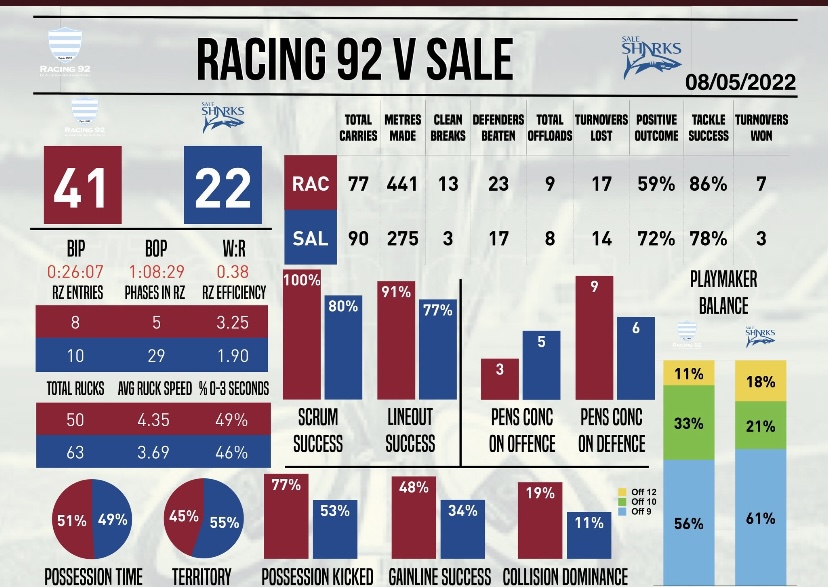
Look at this graphic from BT Sport’s Ross Hamilton to help visualise this (bottom right), in the recent European Quarter Final’s, Sale played 61% off 9 and just 21% off 10 while Leicester played 38% off 10 and just 57% off 9.
Therefore, expect Sale’s playmaker ratios to flip and for their attack to be ran almost entirely through the number 10 shirt.
You may be wondering what this means for what you actually see on the pitch. Well expect the ball to get to the wide channels far more and far less tight forwards play, attacking with one-out runners off the edge of the ruck. The centres and wingers will get far more touches of the ball.
For this reason, a player who is set to have a career season is Raffi Quirke. It is widely agreed that Raffi’s strength is running with the ball and being a threat to the fringes of rucks with his pace and vision. He is not necessarily elite at game management or kicking. With Ford demanding these responsibilities it will take all the pressure off Raffi and allow him to focus on his offensive running game. It sounds strange to say now, but Raffi is very reminiscent of a young Ben Youngs, who first asserted himself in newspaper headlines at the age of 17 as a wily ball runner with freakish speed and agility. Youngs didn’t his elite game management nous until his mid-20s when he already had a handful of England caps under his belt. It wouldn’t be outlandish to suggest that Raffi could have a similar career trajectory.
Ford and Raffi mould together perfectly in terms of complimenting each others strengths and weaknesses. Ford is not known for being an aggressive defender, while Raffi is one of the best defensive 9s in the league and punches 3 times his weight when rushing up on opposition ball carriers.
Possession:
Sale build their success on their defence, they have a number of seriously physical and aggressive loose forwards, as well as a physical inside centre, and they attempt to choke the opposition into making errors through line speed and collisions. Sale are happy to let you have the ball because they are confident in their defence. Sale, who currently sit in 7th, have conceded the 5th least tries in the league with just 60, 2 less than Gloucester in 5th and 13 less than Northampton in 4th. To help visualise this further, here is a helpful graph from Sam Larner showing the metric “try equivalents conceded”, I have linked a definition for this metric, however, in short, it is how many tries a team should concede based on defensive statistics such as tackles missed and linebreaks allowed.
Thread: What do Try Equivalents and Try Equivalents Conceded tell us about the Premiership this season? A couple of key takeaways over the next few posts.
Note, the Try Equivalents Conceded axis is flipped to keep top right the goal.
As you can see by the graph, Sale, by this metric, have the best defence in the league, and arguably are underperforming by leaking as many tries as they have. Furthermore, Sale’s attack is distinctly below average, which is supported by the fact they are 9th in the league for tries scored with just 68.
League Position
Tries Scored
Tries Conceded
Sale Sharks (as of 20.05.22)
7th
9th
5th
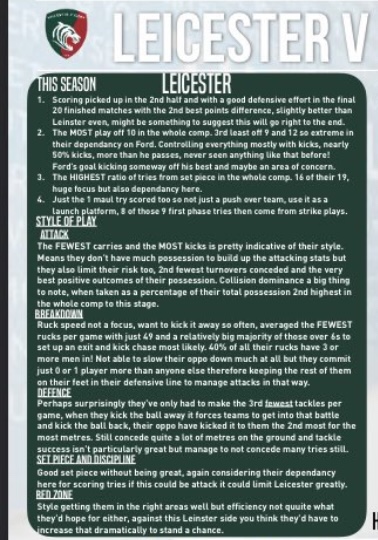
An important thing to note is that, although Ford loves the ball in his hands, he also loves to play without possession. Another graphic from BT Sport’s Ross Hamilton shows us that Leicester had the fewest carries and the most kicks in the whole Champions Cup this season. This is because Ford bases his gameplan on kicking teams to death, he is the master of tactical kicking and has meticulously picked apart many of the best teams in the Premiership with barrages of bombs and territorial grass-cutters.
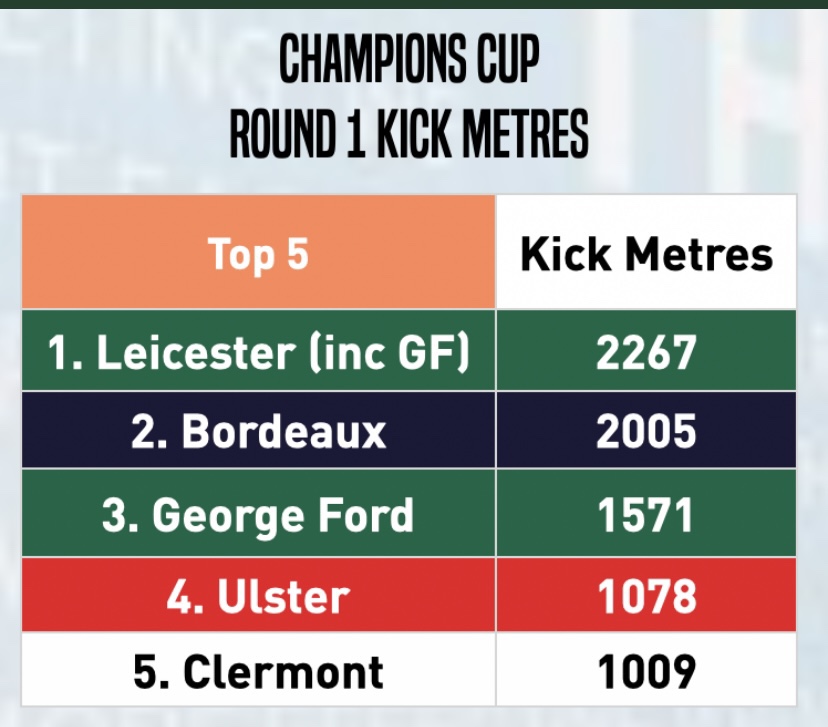
This is confirmed further by this graph, also from BT’s Ross Hamilton, which shows that, in round 1 of the Champions Cup, Ford, just himself, actually kicked more than every other team in the tournament except Bordeaux.
So what does this all mean for Sale next season? Well the main reason Ford and Sale are a match made in heaven is that, as we have established, Ford loves to play without the ball and Sale love to play without the ball. Sale have arguably the best defence in the league so Ford can have free reign to let his kicking game flourish, with the knowledge that Sale back their defence. Add to this the fact that, when one or even two of the Curry twins are on the pitch, attacking teams rarely make it past 10 phases before the ball is stolen or disrupted.
Furthermore, because Ford loves the ball in his hands, but he doesn’t necessarily like to run the ball, he absolutely loves a big physical ball carrying 12 next to him. With Rohan Janse Van Rensburg on the way out this means Manu Tuilagi will be vital next season. This is a combination we, of course, have already seen for both Leicester Tigers and England and I am sure both parties are anxious to reignite. Tuilagi has struggled for fitness recently but if he does stay fit next season I wouldn’t be surprised if he has the best season of his career.
Not to mention that, with all due respect, Ford isn’t known for his big tackles or for stepping out the defensive line to put in a big collision. So a large, defensively intelligent 12, is vital to pair next to George. Alternatively, this season we have seen Leicester defend set pieces with Ford on the wing to protect him from big ball carriers. We could expect Sanderson to do the same with Tuilagi, Rob Du Preez or even Raffi defending in the “10” position.
Kicking Game:
Now we have established that Ford kicks a lot lets analyse his kicking game in detail. Leicester Tigers winger Harry Potter has gone from the Australian 2nd division to one of the best wingers in the Premiership and a big reason for this is because he is seriously elite on the kick chase. With serious speed and a 6’1 stature he is so good at getting underneath Ford’s bombs and either winning the ball in the air or making a dominant collision on the catcher.
Sale winger Arron Reed is slightly shorter at 5’10 but has demonstrated the same elite ability to win the ball in the air or smash a stationary catcher, making significant territorial gain. Expect Reed to become Ford’s best friend next season chasing kicks up and down the pitch and terrorising opposition fullbacks all over the country. Arron arguably already “broke through” this season but he could really cement himself in the upper echelons of Premiership wingers with Ford at the helm next season. The same can be said for Roebuck and O’Flaherty who are both also elite operators on the kick chase.
Who could forget Roebuck’s score vs Leicester or Reed’s score vs Northampton, both nominated for try of the season.
🦈🏅 𝙏𝙧𝙮 𝙊𝙛 𝙏𝙝𝙚 𝙎𝙚𝙖𝙨𝙤𝙣
Time to pick your best meat pie of the season! Who get's your vote?
💥 Tom Roebuck v Leicester 💥 Arron Reed v Northampton 💥 Jack Metcalf v Ospreys 💥 Rohan JV Rensburg v Worcester
Finally, one of the areas Sale have struggled the most this season is goalkicking, frequently leaving points out on the park and missing chances to win, or draw, because of missed kicks at goal. Ford has been one of the best goalkickers in the league for many years, regularly averaging between 80-90% success rate and currently sitting 3rd on the Premiership top point scorers list with 176.
To conclude, despite my previous controversial claims about AJ MacGinty, who is still a fine player, you can assume that Sale’s game will improve infinitely with George Ford next season, especially in attack. Rugby is a game increasingly dominated by the biggest, strongest and fastest players in the world with physical ability often valued over general rugby knowledge and know-how. However, there is no doubt still a place in todays game for a mini-marshall who can win games by simply out-thinking his opposite, George Ford is that man.







 The Match Report