
Everyone who has ever played rugby has felt the same familiar overwhelming brimming of anticipation and eagerness. A massive fixture lies tantalising in reach on the Saturday afternoon, but a full week of work is required first. A glance at the clock re-affirms that gameday is still some time away so all you can do is dream of being on the pitch, of scoring the winning try.
For most of us the pinnacle of this will manifest itself in a humble County Cup Final or maybe a local derby, when your opposite number is someone who loves to tease you about the result at your local pub for months afterwards.
However, in the West of Iberia, there was two men who fulfilled their modest 9-5 plagued with zealous thoughts of clashing with the famous Wallabies, two-times Champions of the World, and with Warren Gatland’s Wales, multiple Six Nations Grand Slam winners. For these few, a full-time occupation coincides with the mental and physical preparation necessary to compete, and win, at the very zenith of the sport.
Playing at the Everest of professional sport when they aren’t a fully professional player.
Portugal rugby’s now talismanic and beloved captain, Tomás Appleton, began studying to become a dentist in 2012, back then rugby was just a hobby and he, nor anyone else, could have foreseen what lay on the horizon.
We know now that the swash-buckling crash-ball inside centre, with silky soft hands to boot, would go on to announce himself on the world stage. However, for much of his life his silky soft hands have been on the inside the mouth of residents of Lisbon, dental hygiene his main focus.
Since becoming a qualified surgeon in 2018, Tomás has become used to balancing work and rugby, working long hours through the week to allow for time to travel and compete all over Europe with ‘O Lobo’ on his chest.
“Personally, I enjoy balancing work and rugby, it is a way I can split my mind between two worlds and escape from one or the other. I find it is good for my mental health.”
However, when the most unlikely of Rugby World Cup qualifications became a reality, everything changed, as a three-month leave, and a chance to live like a professional, was required.
“My work were understanding, they realised that the World Cup was a huge opportunity for me and for Portuguese rugby, an opportunity that I may not get again for a very long time, but it was still hard.
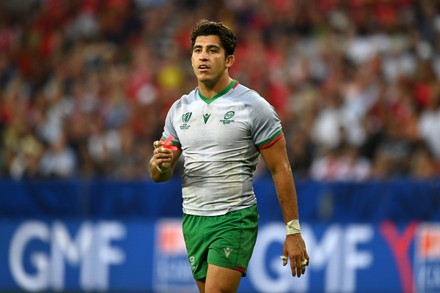
“I noticed the difference in performances when we went full-time (before the World Cup). You can focus 100% on everything regarding rugby and you have no worries about anything else.”
Another player who took time off work to clash with the world’s best was Tomas’ Portugal teammate and Grupo Desportivo Direito flanker, João Granate.
João works for a swimming pool company as a project manager, lending his leadership and commanding presence on the field to managing the pool installers and producers.
“I’m lucky because my boss was a rugby player and is a rugby fan and so he is happy to give me flexible hours, but it is still a 9-5 job.
“It is very tough, balancing work and rugby but I got used to it during college, the teachers were very unhelpful and, for example, wouldn’t let me rearrange my exams when they coincided with rugby. If I missed an exam, I would have to do it again in the summer or the next year.
“In a work environment it is much more stressful because it is not your company. In college when I made mistakes, I was the one who paid for them, now if I make mistakes then other people are affected too. Some days are harder than others.
“It can get very stressful, you’re at work thinking about rugby and you are at rugby thinking about work.”
For the Portuguese players, the three-month period they had in France together was an eye-opening experience, not just for their exploits on the field but also for realising the joys of being a professional athlete, even just for a short period.
João said: “It was harder physically but mentally it takes a bit of steam off to know that you don’t have to be at work or call to say you will be late or hurry to practice and be told off by the coaches for being late.”
“During the European Rugby Championships, it is much harder because we practice during the middle of the day, so you have to tell your boss that you won’t be at work.”
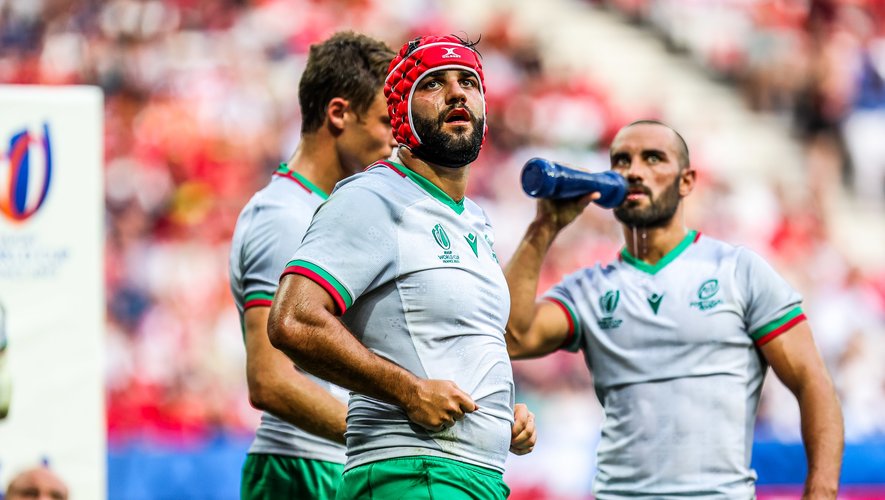
“When you train hard and you can rest your mind, it is easier on your body and your mind, when you train hard and then you have to work and then train again, it is difficult.”
With this new lifestyle, Portugal thrived at Rugby World Cup 2023, beating Fiji, drawing with Georgia and testing the mettle of global rugby juggernauts, Australia and Wales.
When asked if they knew that they would compete with these global superstars on the field, or if they ever doubted their abilities, Joao answers confidently:
“When we qualified for the World Cup, we made it a goal of ours to compete and to not look at the opposition teams and players as above us.
“Not to disrespect any of the players but we knew that if we wanted to compete and win, we had to see them as beatable.
“A massive part of our preparation both mentally and physically was to be on their level. They had things we didn’t have, like World Cup experience, so we had to find an edge.”
“We would joke about certain players, ‘oh he’s good but I’m going to be better than him’”.
Tomás calmly and assertively corroborated this assessment, saying:
“Approaching the World Cup, we were realised our value and our potential, and we were pretty confident that we could compete.
“At the same time, we were not used to playing against top players, for most of us these were players that we usually watch on TV!”
So, what’s next for Portugal rugby’s courageous project manager and dentist duo? Both mention their hopes for a fully professional club division in Portugal and of course more games against ‘tier one’ nations on the world stage.
But what about quitting their day jobs and branching overseas to become bonified professional athletes?
João shows a wry smile at the thought, replying: “I am happy where I am now, but it is always in the back of my head – what if I was professional, where could I aspire to be? I do want to test my level and if there was a good project, I would be open to it.
“I am not doing everything I can to be a professional player because I have that experience alongside my career. But we know that at the World Cup we upped our level and so if I test myself, I do think about where it could go.
“I am open to it (playing rugby full-time), I would like to talk to some people to see if there is opportunities abroad but as of it, nothing has come up.”
His national captain and teammate, on the other hand, is much more coy, his cards firmly pressed to his chest: “At the moment I have a steady life and a balanced life here in Portugal, as a dentist and as a rugby player. I have been in contact with a few agents, some opportunities to play abroad might come in the future but I am not sure, we will see.”
Even after World Cup glory in front of tens of thousands baying supporters, the effortlessly humble João and Tomás, oozing with a quiet but subtle confidence, choose to remain as double-agents, hard-working employees through the week, national heroes come the weekend.
 The Match Report